NEW: Oral weight loss support now available here

Scott Weaver
Updated at: September 21, 2026 · 18 min read
Is Sudocrem Good For Acne? A Pharmacist's Guide to Spot Treatments
Many people have reached for Sudocrem as a home remedy for acne, hoping that dabbing it onto a breakout will calm redness and make spots disappear more quickly. Although this familiar antiseptic healing cream has been used for decades on minor skin problems, questions remain about whether it is suitable as a spot treatment for acne vulgaris, whether it can help blemishes, or whether it may actually make some breakouts worse.
This article explains what Sudocrem contains, how zinc oxide and its other ingredients work, what its licensed indication is, and whether it should be considered an over-the-counter acne cream. It also compares Sudocrem with evidence-based treatments such as benzoyl peroxide and topical retinoids, discusses whether its comedogenic and occlusive ingredients could affect acne-prone skin, and outlines when it is worth speaking to a pharmacist.
Many people ask, "If I keep dabbing on a spot, does it work?" The answer depends on understanding the difference between soothing a single blemish and treating acne itself. Throughout this guide, we examine the harm versus benefit of using this popular home remedy, looking at the available evidence-based information, its licensed use, the official product information and PIL.
We also explain how its mild antiseptics, zinc oxide, thick paraffin base and lanolin base may affect the skin, why these ingredients may clog pores in some people and worsen breakouts, why any use should be limited to individual spots, and why it should not be a whole-face treatment.
In One Sentence:
Sudocrem may temporarily soothe a surface spot thanks to its antiseptic action and astringent properties, but it is not an effective acne treatment, is not primarily licensed for acne, and its occlusive base can contribute to blocked pores.
Key Takeaways
Is Sudocrem good for acne?
Sudocrem is not licensed for acne as a primary treatment and generally soothes, not treats, acne because it does not address the underlying causes of breakouts.
Can it help a single spot?
A thin dab of Sudocrem containing zinc oxide and other antiseptic ingredients may calm an inflamed single spot when applied overnight, although results vary.
Can it make acne worse?
Yes. Its paraffin and lanolin base is occlusive, which may contribute to clogged pores, increasing the risk of blackheads and whiteheads in acne-prone skin.
How should I use it and is it safe?
If used, it should only be applied to individual spots as a night application, then washed off the following morning. Be aware that Sudocrem is flammable, can leave a fire hazard on fabric and may cause skin irritation in some people.
What treats acne better and when should I get help?
Treatments such as benzoyl peroxide and topical retinoids, including adapalene, have stronger evidence behind them. If you have widespread acne, painful acne, acne that is causing scarring, or it is affecting your confidence and wellbeing, speak with a pharmacist or prescriber about appropriate treatment options.
How does Sudocrem work on spots and acne?
Sudocrem works by forming a protective barrier over the skin and may temporarily soothe a surface blemish, but it does not treat the underlying causes of acne vulgaris.
Sudocrem is an antiseptic barrier cream whose ingredients are designed to protect irritated skin rather than treat acne itself. According to the Summary of Product Characteristics (SmPC), zinc oxide acts as an astringent, while also providing soothing and protective effects. Benzyl alcohol acts as a local anaesthetic and disinfectant, while Peru Balsam esters, specifically benzyl benzoate and benzyl cinnamate, contribute a mild antiseptic action. Together, these ingredients may reduce irritation on the skin's surface and make a surface spot appear less red or uncomfortable. This reflects the pharmacological properties listed in the PIL [1].
The cream also contains lanolin within a thick paraffin base, creating a protective layer over the skin. While this barrier may help shield irritated skin from external irritants, it does not address the biological processes responsible for acne vulgaris. Acne develops within the hair follicles, also known as the pilosebaceous unit, where excess sebum, dead skin cells and hyperkeratinisation block pores. This creates an environment where Cutibacterium acnes can multiply, leading to inflammation.
Because Sudocrem does not help with unblocking pores, reducing excess sebum production or preventing new blockages from forming, it has an important barrier cream limitation. It may offer an overnight redness reduction for a single blemish versus acne treatment, but it should not be relied upon as a long-term solution for persistent acne. Someone with one inflamed spot may notice temporary improvement in appearance, whereas someone with ongoing acne is unlikely to see meaningful control of their breakouts.
"If Sudocrem seems to have taken the redness out of a spot overnight, that does not mean it has treated the acne itself. There is an important difference between soothing a one-off blemish and treating acne. Sudocrem soothes, not treats, while effective acne treatments work on the underlying causes of blocked pores and inflammation.”
What are the key ingredients in Sudocrem?
Sudocrem contains several active ingredients that help protect irritated skin, but these ingredients are not designed to treat acne directly.
Sudocrem is available as a General Sales List (GSL) medicine in the UK and is marketed by Teva UK under a recognised marketing authorisation. Its formulation combines active ingredients with emollients and other excipients that are intended to protect damaged skin.
The principal active ingredients include:
Zinc oxide 15.29%, which acts as an astringent while providing soothing and protective properties.
Benzyl alcohol 0.39%, which has local anaesthetic and disinfectant effects.
Benzyl benzoate 1.02%, a Peru Balsam ester that also functions as an acaricide and solubilising agent.
Benzyl cinnamate 0.15%, another Peru Balsam ester with reported antibacterial and antifungal properties.
Hypoallergenic lanolin 4.02%, an emollient that softens the skin but also resembles sebum and contributes to the cream's occlusive nature, raising questions about possible pore-clogging in acne-prone skin.
Other ingredients include sodium benzoate and additional excipients that give the cream its characteristic texture and stability.
Although zinc has attracted interest as an acne treatment, the evidence relates mainly to zinc used as a therapeutic ingredient rather than zinc oxide within a barrier cream. A meta-analysis of zinc for acne found that people with acne often have lower serum zinc levels than those without acne, and zinc supplementation was associated with improvements in inflammatory papules, although the authors concluded that the overall evidence remains limited and more high-quality research is needed [2].
Research into how zinc may act on acne also suggests that zinc may have antibacterial and anti-inflammatory properties and could reduce sebum production. However, the quality of evidence remains moderate, meaning zinc alone cannot be considered a reliable standalone acne treatment [3].
For this reason, while zinc oxide contributes to Sudocrem's protective and soothing effects, its presence should not be taken as evidence that the cream is an effective treatment for acne. The overall formulation remains a barrier cream rather than a targeted acne medicine.
Ingredient (SmPC amount) | What it does | Relevance to spots |
| Zinc oxide (15.29%) | Astringent, soothing and protective dermatological agent. | May dry and calm a surface spot and offer mild protection. |
| Benzyl alcohol (0.39%) | A local anaesthetic with disinfectant properties. | Gives a mild soothing and antiseptic effect. |
| Benzyl benzoate (1.02%) | A Peru Balsam ester, also an acaricide and solubilising agent. | Carries a mild antiseptic balsam action. It does not repair skin. |
| Benzyl cinnamate (0.15%) | The other Peru Balsam ester, with mild antibacterial and antifungal action. | Adds a mild antiseptic effect. |
| Lanolin, hypoallergenic (4.02%) | An emollient that closely resembles the skin's own sebum. | Softens skin, but is occlusive and can clog pores. |
Why You Should Not Slather Sudocrem All Over Your Face
Sudocrem should not be applied across the whole face because its thick, occlusive formulation may increase the risk of clogged pores in acne-prone skin.
Sudocrem was developed as a barrier cream to protect damaged or irritated skin, such as nappy rash, rather than as a treatment for facial acne. Its rich formulation creates a water-repellent barrier by forming a protective film over the skin. While this can be beneficial when shielding damaged skin from moisture or friction, it is much less suitable for skin that is already prone to blocked pores.
Acne develops when trapped sebum, dead skin cells and bacteria build up inside the hair follicle. Covering large areas of the face with an occlusive cream may make it more difficult for excess oil to disperse naturally, increasing the likelihood of comedones, including blackheads and whiteheads, developing in susceptible individuals.
The cream also contains hypoallergenic lanolin, an ingredient that resembles sebum and helps soften and protect the skin. Although lanolin is well tolerated by many people, its rich texture may not suit people with oily skin or acne-prone skin, particularly if it is used repeatedly over large areas.
This is why whole-face application is generally discouraged. If Sudocrem is used at all for acne, it should only be considered as a temporary treatment for an isolated blemish rather than as part of an everyday skincare routine.
Which Sudocrem ingredients can clog pores?
Several ingredients within Sudocrem's rich base may contribute to blocked pores when applied generously or frequently.
Sudocrem contains a number of comedogenic ingredients within its emollient and wax base. These include lanolin, liquid paraffin, paraffin wax, beeswax and microcrystalline wax. Together, these ingredients create the characteristic occlusive film that protects irritated skin from moisture and external irritants.
While this protective layer has an important role in treating conditions where the skin barrier is damaged, it is less suitable for acne-prone skin. The occlusive layer may contribute to blocked pores, especially in people who naturally produce more oil or who already experience frequent breakouts.
The NHS recommends avoiding oil-based products that may be comedogenic where possible. Instead, people with acne should choose skincare and sun protection labelled as water-based products or non-comedogenic products, as these are less likely to block pores and worsen acne-prone skin. This advice applies to moisturisers, make-up, cleansers and other leave-on skincare products, not just acne treatments [4].
Using products specifically designed for acne-prone skin can help reduce the risk of further congestion while allowing evidence-based acne treatments to work more effectively.
Safety Note: Sudocrem is a Fire Hazard on Fabric
Sudocrem contains paraffin-based ingredients that can leave flammable residues on fabrics, creating a serious fire risk.
Many people are unaware that creams containing paraffin or liquid paraffin can present a significant fire hazard when they soak into clothing, bedding or dressings. As these products build up on fabrics over time, the material becomes more flammable, increasing the risk of severe burns if exposed to naked flames or smoking materials.
Importantly, fabric residue may remain even after repeated washing, meaning laundering clothing or bedding does not completely eliminate the risk.
The SmPC for Sudocrem includes warnings about this issue, which are reinforced by the MHRA safety warning on paraffin-based emollient fire risk. Anyone using Sudocrem regularly should avoid smoking while wearing contaminated clothing and should keep treated fabrics away from candles, gas fires and other ignition sources [1].
"One of the biggest concerns with using Sudocrem as an all-over cream is the comedogenic risk. Its occlusive barrier works well for protecting a baby's skin, but on an acne-prone face it can trap oil and dead skin cells that contribute to fresh spots. Less is more. If you choose to use Sudocrem, use it sparingly and only on individual blemishes rather than across the whole face."
How to Use Sudocrem For Spots Safely
If you decide to use Sudocrem on an occasional spot, it should be used sparingly, only on the affected area and never as a replacement for proper acne treatment.
Sudocrem may have a place as a short-term option for the targeted use of an occasional spot, but it is not a substitute for acne treatment. Applying too much cream or using it too frequently may increase the likelihood of irritation or blocked pores, particularly in people with acne-prone skin.
Cleanse
Begin by washing the affected area with a mild soap or non-comedogenic cleanser using lukewarm water. Avoid harsh scrubbing, which can irritate inflamed skin. Gently pat dry with a clean towel before applying any treatment.
Isolate
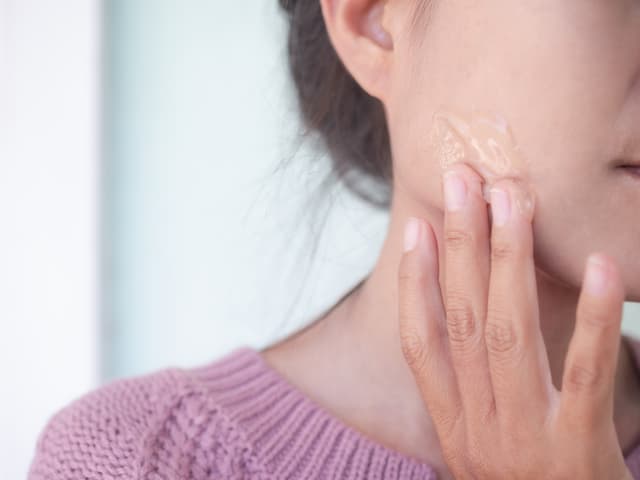
Use a clean finger or preferably a cotton bud to isolate the blemish. Apply only a paper-thin layer directly onto the individual spot. Avoid spreading the cream onto surrounding healthy skin or larger areas of the face. This spot-only application reduces unnecessary exposure to the cream's occlusive ingredients.
Time It
Sudocrem is generally best used as an overnight treatment if you choose to use it. Leave the thin layer in place overnight before you wash off in the morning using a gentle cleanser. There is little benefit in reapplying it repeatedly throughout the day.
Avoid layering Sudocrem over treatments such as benzoyl peroxide or a retinoid. Because Sudocrem has an occlusive base, it may trap active ingredients against the skin, potentially increasing skin irritation or affecting how comfortably those treatments are tolerated.
Patch Test First
Before using Sudocrem on your face for the first time, carry out a patch test by applying a small amount to an inconspicuous area of skin and waiting 24 hours. If you develop significant redness, itching, swelling or other signs of local irritation, do not continue using the product.
People with sensitive skin or known allergies to any of the ingredients should seek advice from a pharmacist before using Sudocrem on facial skin.
What actually treats acne? Evidence-based Alternatives
Evidence-based acne treatments target the underlying causes of acne by helping to unblock pores, reduce bacteria and reduce inflammation.
Unlike barrier creams such as Sudocrem, modern acne treatments are designed to address the biological processes that drive acne. Depending on the severity of your symptoms, treatment may aim to unblock pores, reduce bacteria on the skin and reduce inflammation.
For mild acne, a pharmacist can often recommend appropriate non-prescription treatments. If your acne is persistent acne, more widespread or leaving marks, NICE NG198 recommends treatments that are supported by clinical evidence. These include topical treatments, combination treatments and, where appropriate, prescription medicines following an online consultation or face-to-face assessment.
Current NICE guidance on managing acne recommends first-line 12-week treatment courses using fixed topical combinations, such as adapalene with benzoyl peroxide. When oral antibiotics are required, they should always be used alongside a topical treatment rather than on their own to support good antimicrobial stewardship [5].
Research also supports the Cochrane review of benzoyl peroxide for acne, which found that benzoyl peroxide remains an important first-line treatment because it acts directly against acne-causing bacteria and has not been associated with bacterial resistance [6].
Over-the-counter Acne Treatments
Several over-the-counter acne treatments have much stronger evidence than Sudocrem for reducing acne.
If you have mild spots, a pharmacist may recommend one of several proven over-the-counter acne treatments.
Clinical evidence continues to support benzoyl peroxide as one of the most effective pharmacy treatments. Pooled evidence on benzoyl peroxide's effect on spots found that, over a 12-week period, benzoyl peroxide reduced total acne lesions as well as inflammatory and non-inflammatory spots compared with placebo [7].
Feature | Sudocrem | Benzoyl peroxide |
| Main action | Soothes and protects the skin surface. | Reduces acne bacteria and helps unblock pores. |
| Unblocks pores | No. | Yes. |
| Targets acne bacteria | Mild antiseptic effect only. | Yes, directly reduces Cutibacterium acnes. |
| Effect on pores | Occlusive base can clog them. | Helps clear and prevent blackheads and whiteheads. |
| How to apply | Thin dab on individual spots. | Thin layer across the whole affected area. |
| Evidence for acne | A licensed use, but limited evidence as a treatment. | NICE-recommended and well-evidenced. |
| Best for | Calming the occasional spot. | Mild to moderate acne. |
Prescription Acne Treatments
Prescription acne treatments are recommended when acne is more persistent, widespread or likely to cause scarring.
If over-the-counter products are not improving your skin, prescription acne treatments may be appropriate. According to NICE NG198, treatment is generally reviewed after a 12-week course, allowing enough time to judge whether the medicine is working.
First-line treatment commonly involves a fixed combination containing topical adapalene, a retinoid, together with topical benzoyl peroxide. Other recommended options include topical tretinoin, topical clindamycin or benzoyl peroxide with clindamycin, depending on the type and severity of acne.
People with mild to moderate acne often respond well to topical therapy alone. Those with moderate to severe acne may require oral antibiotics, including lymecycline or doxycycline, but these should always be combined with topical treatment. This approach supports antibiotic stewardship by helping reduce the development of antimicrobial resistance.
An online consultation with qualified prescribers includes a suitability check to determine whether prescription treatment is appropriate and safe.
Evidence from a systematic review also supports the safety and effectiveness of adapalene combined with benzoyl peroxide as a first-line treatment for acne vulgaris [8]. Likewise, a summary of the NICE acne treatment pathway reinforces that topical adapalene with benzoyl peroxide, or topical tretinoin with clindamycin, remain recommended first-line options across different severities of acne [9].
"There is an important difference between recurring acne versus the odd spot. The biggest shift in treatment comes when people move away from spot-dabbing a barrier cream and begin treating the whole affected area with products that target blocked pores. Give proven treatments a proper 8 to 12 weeks before deciding whether they are working, and do not switch too soon."
Treatment type | How it works | Best for |
| Barrier or antiseptic cream (e.g. Sudocrem) | Soothes and protects the skin surface. Does not unblock pores. | Calming the occasional individual spot, short term. |
| OTC topical (benzoyl peroxide, salicylic acid) | Reduces surface bacteria and helps unclog pores. | Mild or occasional breakouts. |
| Prescription topical (retinoids, fixed combinations) | Unblocks pores and reduces inflammation across the area. | Mild to moderate acne vulgaris. |
| Oral prescription (with a topical) | Reduces bacteria and inflammation more widely. | Moderate to severe or persistent acne. |
Frequently Asked Questions
Does Sudocrem get rid of spots overnight?
Sudocrem may reduce the appearance of a single inflamed spot overnight, but it is not an overnight cure for acne.
Some people notice a reduction in redness after applying Sudocrem to a single spot before bed. This may be due to its mild drying action, antiseptic action and soothing properties. However, it does not clear acne, and results vary between individuals. At best, it may act as a soothing dab for an isolated blemish rather than providing an effective overnight treatment.
Is Sudocrem comedogenic?
Sudocrem may contribute to blocked pores in some people, particularly when used across larger areas of the face.
Because Sudocrem contains lanolin within a paraffin base, its occlusive texture may clog pores in susceptible individuals. Using it on individual spots occasionally is less likely to cause problems than whole-face use, but people with acne-prone skin should still be cautious. The NHS recommends choosing water-based, non-comedogenic skincare products where possible instead of oil-based alternatives [4].
Can Sudocrem help cystic or hormonal acne?
Sudocrem is not an appropriate treatment for cystic, nodular or hormonal acne.
Conditions such as cystic acne, nodular acne and hormonal acne usually require medical treatment because the inflammation develops much deeper within the skin. A barrier cream limitation is that it cannot treat the underlying cause of these forms of acne. Delaying effective treatment may increase the scarring risk, making early medical assessment worthwhile.
Is Sudocrem actually licensed for acne?
Sudocrem includes acne among its listed uses, but that does not mean it is one of the most effective acne treatments.
The UK product information and SmPC include acne within the product's listed use, alongside conditions such as nappy rash and other minor skin conditions. However, there is an important difference between being licensed versus most effective. Modern guidance, including NICE, recommends treatments specifically developed to target acne rather than relying on barrier creams.
Can I use Sudocrem alongside other acne treatments?
Sudocrem can sometimes be used alongside acne treatments, but care is needed.
Applying multiple products at the same time may increase the risk of irritation. Layering products such as benzoyl peroxide or a retinoid underneath Sudocrem's occlusive base may leave trapped active ingredients against the skin, increasing the chance of skin irritation. If you are unsure about product compatibility, ask a pharmacist for advice.
What can I use instead of Sudocrem for acne?
Evidence-based acne treatments are generally better alternatives than Sudocrem.
Suitable Sudocrem alternatives include benzoyl peroxide, salicylic acid and other pharmacy options for mild spots. Where acne is more persistent, prescription retinoids and combination treatments recommended by NICE are more appropriate. If you have persistent acne, seek professional advice so that treatment can be matched to the severity of your condition.
Final Thoughts From Our Clinical Team
“Sudocrem may have a limited role as a thin dab on a single inflamed spot, but it should not be viewed as a long-term acne treatment.
The zinc oxide and antiseptic ingredients within Sudocrem may temporarily soothe irritated skin, but a barrier cream not acne treatment cannot address the blocked pores, excess oil production and inflammation that drive acne. Its occlusive base may contribute to trapped oil and dead skin, increasing the likelihood of more spots if used too generously. If you choose to use Sudocrem, use sparingly and only on individual spots.
People experiencing regular breakouts, painful acne or acne that is affecting their confidence and wellbeing should speak with a pharmacist or qualified prescribers about evidence-based treatments such as benzoyl peroxide and topical retinoids. Starting proven treatments early can improve outcomes and help avoid scarring.
Finally, remember that Sudocrem contains paraffin, which can leave residues on clothing and bedding. Because of the associated fire hazard and fabric flammability, keep treated fabrics away from naked flames and follow the product safety advice. Only use Sudocrem when appropriate, while relying on evidence-based acne treatments for long-term management.”
Sources
[1] Sudocrem PIL
[4] Acne - NHS
[5] Recommendations | Acne vulgaris: management | Guidance | NICE
[6] Topical benzoyl peroxide for acne - Cochrane Library
[9] NICE guidance on the management of acne vulgaris - Chaplin - 2021
Related Blog Posts



Blog author


Scott Weaver
Scott is an experienced and professional content writer who works exclusively for UK Meds.
Content last updated:

Related Blog Posts






Here to help you
Our Customer Service is available Monday to Friday 9am - 5pm. If you need urgent assistance, do not use this service. Call 111, or in an emergency call 999. Visit our help section