NEW: Oral weight loss support now available here
- Home
- Weight Loss
- Weight Loss Injections & Tablets
Weight Loss Injections & Tablets
Weight loss injections and pills are prescription-only medicines that can support weight loss when diet and exercise alone have not been enough. In the UK, the main options include GLP-1 and dual GIP/GLP-1 injections such as Wegovy (semaglutide), Mounjaro (tirzepatide) and liraglutide, alongside tablets and capsules such as Orlistat (sold as Xenical, Alli and Orlos) and Mysimba. A newer oral GLP-1, the Wegovy pill, was approved by the UK regulator on 11 June 2026. These treatments all require a prescription from a registered prescriber after a proper health check, and they work best alongside a reduced-calorie diet and regular activity.
More Information
At a glance
Weight loss injections and pills are prescription treatments that can help you lose weight when diet and lifestyle changes alone have not been enough. They work in different ways, most commonly by reducing appetite so you feel full sooner, and some by reducing how much fat your body absorbs. All are prescription-only and are supplied only after an online consultation with a UK-registered prescriber, who checks that a treatment is safe and suitable for you.
- How they work: Most reduce appetite so you eat less; one type reduces how much fat you absorb.
- Who they are for: Usually adults with a BMI of 30 or above, or 27 to 30 with a weight-related condition.
- How to get them: A confidential online consultation with a UK-registered prescriber who verifies your BMI.
- What to expect: Steady weight loss over several months, alongside healthier eating and more activity.
- Safety: These are prescription-only medicines with possible side effects and are not suitable for everyone.
What are weight loss injections and pills?
Weight loss injections and pills (also known as "anti-obesity medications" or "AOMs") are licensed medicines that help some people lose weight and keep it off, usually when lifestyle changes alone have not worked. They fall into a few groups. GLP-1 injections such as Wegovy (semaglutide) and the dual-action Mounjaro (tirzepatide) mimic gut hormones that control appetite. Liraglutide is an older daily GLP-1 injection.
Oral options include Orlistat capsules (Xenical and generic orlistat at prescription strength, Alli and Orlos at a lower strength), which reduce how much fat your body absorbs from food. Mysimba tablets also act on the parts of the brain linked to appetite and cravings.
As of June 2026, there is also an oral version of semaglutide, the Wegovy pill, which is covered further down this page.
All of these are prescription-only medicines, apart from low-dose orlistat (Alli), which a pharmacist can supply after checking that it is suitable for you. None of them is a quick fix, and they are designed to be used alongside healthier eating and more movement, not instead of them.
"We think of these medicines as a tool, not a magic wand. They work with your effort, not in place of it. The people who do best are the ones who use the medicine to make a calorie-controlled diet and more activity feel achievable, and who stay in touch with their clinician along the way."
The UK Meds Clinical Team
Video: a guide to prescription weight loss treatments
If you would rather watch than read, the short guide below covers how prescription weight loss treatments work, who they are for and what to expect. Video is a quick way to get the essentials before you read the detail further down this page.
How does weight loss treatment work at UK Meds?
Weight loss treatment at UK Meds is led by registered prescribers, not by automatic approval. You start by completing a confidential online consultation about your health, weight, medical history and any other medicines you take. A prescriber on our clinical team then reviews your answers in full.
In line with General Pharmaceutical Council (GPhC) guidance, our prescribers independently check your weight, height and body mass index (BMI) rather than relying on self-reported numbers alone. A prescriber will only issue a prescription if a treatment is clinically appropriate and safe for you. If it is not, the team will tell you honestly and can talk you through other options.
"Independent verification matters because these are powerful medicines, not lifestyle products. We need to be confident that the figures are accurate and that a treatment is genuinely right for you. A photo on its own is never enough, and we would rather say no to a prescription than put someone at risk."
The UK Meds Clinical Team
How FitXpress Supports A Safe Consultation
FitXpress is the UK Meds tool that helps you start your consultation and gather what a prescriber needs to assess you, but it supports our clinicians rather than replacing them. A registered prescriber reviews your case, independently confirms your weight, height and BMI, and makes the final decision on whether to prescribe. The steps below show how it works.
How FitXpress works
- Start: Tell us which type of treatment you are enquiring about, so we can ask the right questions.
- Consult: Complete a confidential medical questionnaire about your health and history.
- Scan: Upload two photos (fully clothed, in an A-pose) to help estimate your measurements as part of your assessment.
- Clinical review: A GMC-registered prescriber reviews your information, independently verifies your BMI, and issues a prescription only if treatment is appropriate and safe for you.
Top tips for a clear scan:
- Wear fitted rather than baggy clothing, so your shape is easier to see.
- Stand in a well-lit area against a plain, light-coloured wall.
- Use the voice assistant feature if you are taking the photos yourself.
- Make sure your whole body is visible in the frame.
How do weight loss injections work?
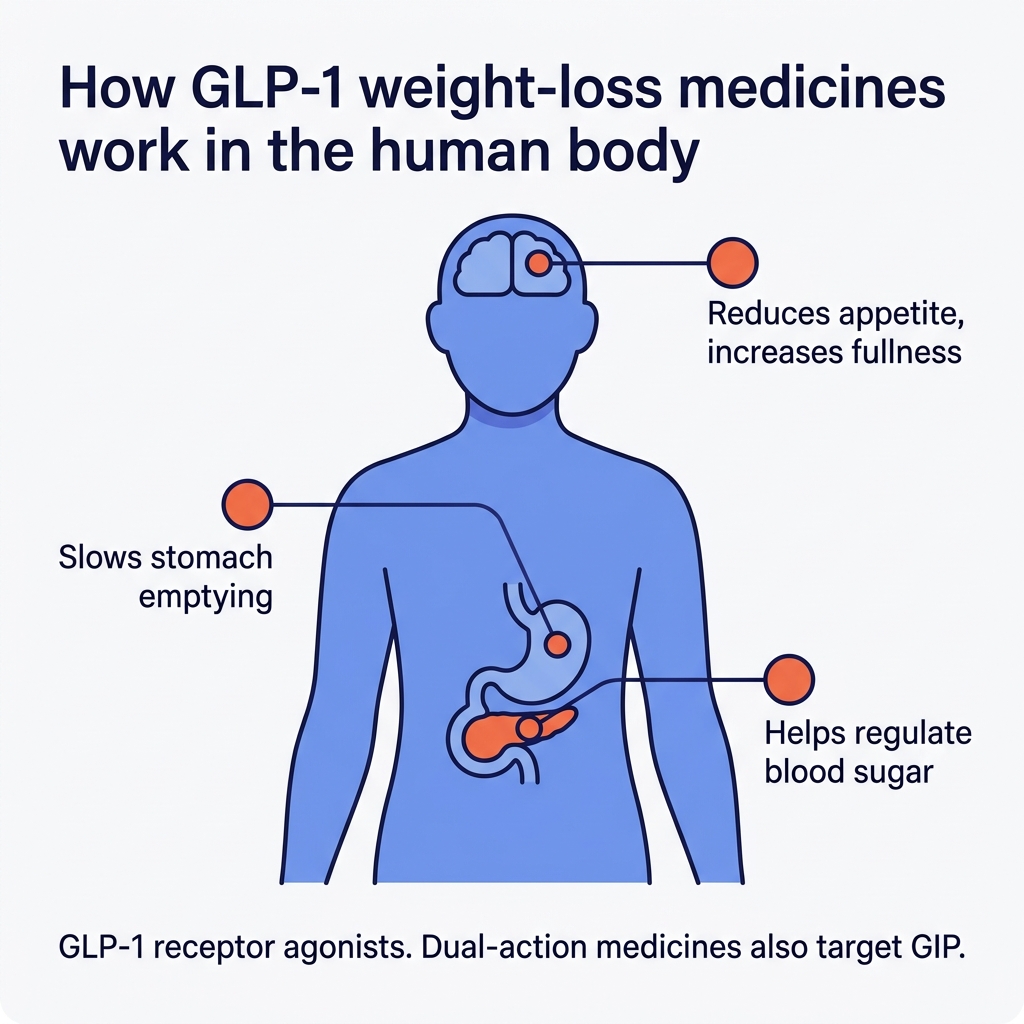
Weight loss injections work mainly by reducing your appetite, so you feel full sooner and stay satisfied for longer. Most of them belong to a group of medicines called GLP-1 receptor agonists. They copy a natural hormone called glucagon-like peptide-1 (GLP-1), which your gut releases after eating. By acting on appetite signals in the brain and slowing how quickly food leaves your stomach, they make it easier to eat less without feeling hungry. Some people describe this as turning down the "food noise".
GLP-1 medicines work as prescription appetite suppressants, while over-the-counter "appetite suppressant" products are a different and much weaker
.Mounjaro goes one step further. It is a dual agonist, which means it mimics two gut hormones, GLP-1 and glucose-dependent insulinotropic polypeptide (GIP). Together, these help control appetite and how the body handles blood sugar. Because the active ingredients differ, some people tolerate one injection better than another.
Wegovy (semaglutide)
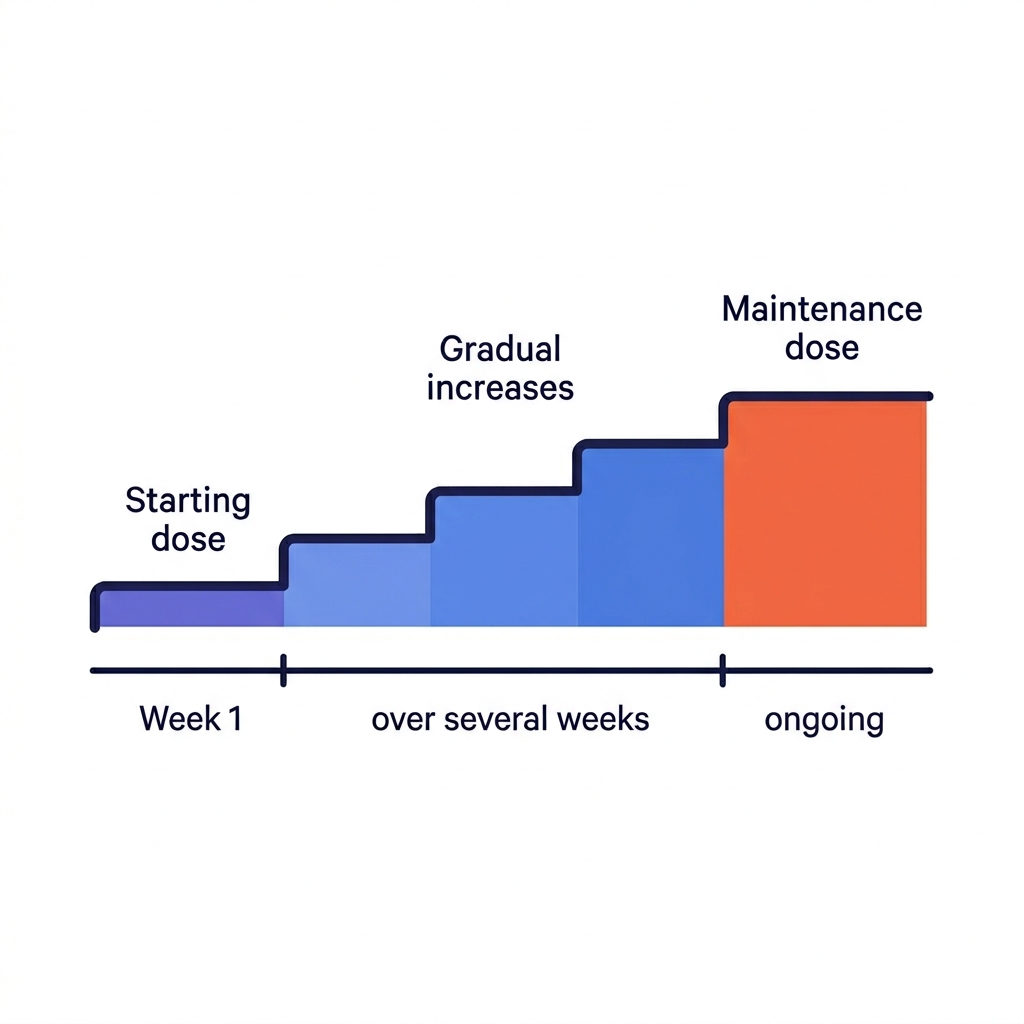
Wegovy is a once-weekly injection containing semaglutide, a GLP-1 receptor agonist licensed specifically for weight management. It is injected under the skin and started at a low dose, then increased gradually over several months to let your body adjust. In the STEP 1 trial, people using the 2.4mg maintenance dose lost on average around 15% of their body weight over 68 weeks. A higher 7.2mg dose has since been approved in the UK, and in the STEP UP trial people on this dose lost on average around 20.7% of their body weight over 72 weeks. Semaglutide was first used to treat type 2 diabetes under the name Ozempic, but Wegovy uses it at doses licensed for weight loss.
Mounjaro (tirzepatide)
Mounjaro is a once-weekly injection containing tirzepatide, the first dual GIP and GLP-1 medicine licensed in the UK for weight management. It is injected under the skin and follows a step-up dosing schedule, usually increasing every four weeks towards a maximum maintenance dose. In the SURMOUNT-1 trial, people on the highest 15mg dose lost on average up to 22.5% of their body weight over 72 weeks, which makes it the most effective weight loss injection currently available in the UK. Tirzepatide is a "black triangle" medicine, which means it is under extra safety monitoring, so reporting any side effects is especially helpful.
Liraglutide (Saxenda and Nevolat)
Liraglutide is a daily GLP-1 injection, sold under brand names including Saxenda and the generic Nevolat. It works in a similar way to semaglutide by reducing appetite, but it breaks down faster in the body, which is why it is taken every day rather than weekly. In the SCALE trial, people using liraglutide lost on average around 8% of their body weight over 56 weeks. It is an older, well-established option, though it generally produces more moderate results than newer once-weekly injections.
"There is no single best injection. The right choice depends on your health, your medical history, how your body responds and what fits your life. Mounjaro tends to give the largest average weight loss in trials, but for some people, Wegovy or liraglutide is the better fit. That is a conversation to have with your prescriber, not a decision to make on price alone."
The UK Meds Clinical Team
Weight loss pills and tablets explained
Weight loss pills and tablets work in different ways depending on their active ingredient, and not all of them affect appetite. The main types licensed in the UK are orlistat-based capsules, Mysimba tablets, and the Wegovy pill, a newer oral form of semaglutide approved in 2026. Each works in a different way, which we explain below.
Orlistat (Xenical, Alli and Orlos)
Orlistat reduces how much fat your body absorbs from the food you eat. It blocks enzymes called lipases that break down dietary fat in the gut, so around a third of the fat in a meal passes out of the body rather than being absorbed. Prescription-strength capsules contain 120mg of orlistat and are sold as Xenical or as generic orlistat. Alli and Orlos contain a lower 60mg dose, and Alli is available from a pharmacy after a suitability check. In clinical trials, taking orlistat alongside a lower-fat, reduced-calorie diet helped more people lose at least 5% of their body weight than diet and exercise alone, and prescription-strength orlistat is usually stopped if you have not lost at least 5% of your body weight after 12 weeks. The lower-dose 60mg version, Alli, is licensed for adults with a BMI of 28 or above and is intended for use for up to six months.
What orlistat is not
It is worth clearing up some common myths, because misleading terms are everywhere in search results. Orlistat (including Xenical, Alli and Orlos) is not a "fat burner", a "fat binder", an "appetite suppressant", a "carb blocker" or a "metabolism booster". It simply reduces fat absorption from food. Treating it as anything else can lead to disappointment and to unsafe use.
Mysimba
Mysimba is a daily tablet that targets appetite and cravings rather than fat absorption. It contains two active ingredients, naltrexone and bupropion, which act on the parts of the brain involved in hunger and reward. This can make it easier to eat less without feeling as deprived. It is taken following a step-up schedule until you reach the maintenance dose. In clinical trials, average weight loss with Mysimba was modest, at around 4% to 6% over 56 weeks, which was more than with diet and lifestyle changes alone.
Wegovy pill (oral semaglutide)
The Wegovy pill is a once-daily tablet containing semaglutide, the same GLP-1 medicine used in the Wegovy injection, in a form you swallow rather than inject. Like the injection, this oral GLP-1 works mainly by reducing appetite, so you feel full sooner and eat less. It is the first GLP-1 tablet licensed in the UK for weight management, for adults with a BMI of 30 or above, or 27 to 30 with a weight-related condition, alongside a reduced-calorie diet and more activity.
How you take these GLP-1 tablets matters, because oral semaglutide is only absorbed properly on an empty stomach. You take one tablet when you wake, swallow it whole with a small sip of water, and then wait at least 30 minutes before eating, drinking or taking any other tablets. You start on a low 1.5mg strength, and the dose is increased in steps, through 4mg and 9mg, up to a 25mg maintenance dose, so your body has time to adjust. Like Mounjaro, it is a black triangle medicine under extra safety monitoring, so reporting any side effects is especially helpful.
You can read more about how it works, the licensed strengths and who it is for on our Wegovy oral tablet page.
Weight Loss Medication Compared
The table below compares the main weight loss medicines available in the UK, including how they are taken, how effective they were in clinical trials and their most common side effects. Effectiveness figures come from clinical studies that differ in length and design, so treat them as a guide rather than a promise. Your own results will depend on your starting weight, your dose, how well you stick to a healthy diet and activity, and your own body.
| Medicine | Type | Active ingredient | How often is it taken | Average weight loss in trials | Common side effects |
|---|---|---|---|---|---|
| Mounjaro | Dual GIP and GLP-1 injection | Tirzepatide | Once weekly | Up to 22.5% at 15mg over 72 weeks (SURMOUNT-1) | Nausea, diarrhoea, vomiting, constipation |
| Wegovy (injection) | GLP-1 injection | Semaglutide | Once weekly | Around 15% at 2.4mg (STEP 1); around 20.7% at 7.2mg (STEP UP) | Nausea, vomiting, diarrhoea, constipation, headache |
| Wegovy (pill) | Oral GLP-1 tablet | Semaglutide | Once daily, fasted | Broadly similar to the 2.4mg injection in trials | Nausea, vomiting, diarrhoea, constipation |
| Liraglutide (Saxenda, Nevolat) | GLP-1 injection | Liraglutide | Once daily | Around 8% over 56 weeks (SCALE) | Nausea, vomiting, diarrhoea, headache, dizziness |
| Orlistat (Xenical, generic) | Fat-absorption capsule | Orlistat 120mg | Up to 3 times daily with meals | More people lose at least 5% than with diet alone; stop if under 5% lost by 12 weeks | Oily or urgent bowel movements, wind, stomach pain |
| Alli, Orlos | Fat-absorption capsule (lower dose) | Orlistat 60mg | Up to 3 times daily with meals | Modest added loss vs diet alone; used up to 6 months (Alli) | Oily or urgent bowel movements, wind, stomach pain |
| Mysimba | Appetite and craving tablet | Naltrexone and bupropion | Once or twice daily | Around 4% to 6% over 56 weeks | Nausea, headache, constipation, dry mouth |
How much weight can you lose with weight loss medication?
How much weight you can lose depends on the medicine, the dose, and how closely you follow a healthy diet and activity plan, but clinical trials give a useful picture. The most effective injection, Mounjaro at its highest dose, helped people lose on average up to 22.5% of their body weight over 72 weeks. Wegovy helped people lose on average around 15% at the 2.4mg dose and around 20.7% at the higher 7.2mg dose. Liraglutide produced more moderate results, at around 8% on average, with Mysimba lower again at around 4% to 6%, while orlistat helped a good proportion of people lose at least 5%.
These are averages from studies, not predictions for any one person. Some people lose more, some lose less, and a few do not respond well and may be better suited to a different treatment. Weight loss medicines are intended for steady, long-term use rather than rapid weight loss, and the weight tends to come off gradually over many months.
Side effects of weight loss medication
Like all medicines, weight loss treatments can cause side effects, and these are most common when you first start or when your dose goes up. With GLP-1 injections such as Wegovy, Mounjaro and liraglutide, the most common side effects are digestive. They usually ease as your body gets used to the medicine.
Common side effects of GLP-1 medicines include:
- Nausea
- Vomiting
- Diarrhoea
- Constipation
- Indigestion, heartburn and bloating
- Burping and wind
- Tiredness, headache or dizziness
- Dry mouth or changes in taste
- Redness, itching or a small lump where you inject
Less commonly, GLP-1 medicines can cause more serious problems, including:
- Gallstones
- Inflammation of the pancreas (pancreatitis)
- Low blood sugar (hypoglycaemia), if you also take insulin or a sulfonylurea for diabetes
Orlistat works in the gut, so its side effects are different and are more likely after a high-fat meal. They include:
- More frequent, urgent or oily bowel movements
- Wind
- Stomach discomfort
Mysimba can cause:
- Nausea
- Headache
- Constipation
- Dry mouth
Losing a lot of weight quickly can also affect your body in other ways. You may notice loose or sagging skin, and periods can become more irregular for a time before settling again.
Report side effects through the Yellow Card scheme
If you think you have had a side effect from any medicine, you can report it to the UK regulator through the MHRA Yellow Card scheme, as well as telling your doctor, pharmacist or nurse. Reporting helps keep medicines safe for everyone. The lists above are not complete, so always read the patient information leaflet that comes with your treatment.
"Most side effects are mild and settle within a few weeks, and starting at a low dose is designed to keep them manageable. The simple things help a lot. Smaller and slower meals, food that is higher in protein and fibre, going easy on greasy meals, and staying well hydrated. If symptoms are severe, do not go away, or you have ongoing severe stomach pain, stop and speak to a healthcare professional straight away."
The UK Meds Clinical Team
Who can and cannot take weight loss medication?
You may be able to take weight loss medication if you are over 18 and a prescriber confirms it is safe for you. For most of these medicines, you may be suitable if:
- You have a BMI of 30 or above
- You have a BMI between 27 and 30 along with a weight-related health condition, such as type 2 diabetes, high blood pressure or sleep apnoea
Each medicine has its own exact criteria, and being eligible on paper does not mean a treatment is right for you.
Weight loss medicines are not suitable for everyone. A treatment may not be suitable, or a prescriber may take extra care, if any of these apply:
- You are pregnant, trying to become pregnant or breastfeeding
- You have a history of pancreatitis
- You have certain thyroid conditions
- You have gallbladder problems
- You have an eating disorder
- You take other medicines that could interact
Other conditions and medicines can also affect whether a treatment is safe, which is exactly why an honest, complete consultation matters.
Important safety points with GLP-1 medicines
- Contraception: if you take the contraceptive pill and use Mounjaro, you should use an extra method of contraception, such as condoms, when you start and after each dose increase, because the pill may not be absorbed as well.
- HRT: if you use hormone replacement therapy, patches or gels may be more reliable than tablets while on these medicines. Ask your doctor.
- Surgery: tell your healthcare team, including the anaesthetist, that you are taking a GLP-1 medicine before any operation or procedure.
"Please tell us everything on your consultation, even the things that feel awkward. The medical history you share is what lets us prescribe safely. If a treatment is not suitable for you, we will say so, explain why, and point you towards a safer option. Saying no when it matters is part of looking after you."
The UK Meds Clinical Team
Can you switch between weight loss injections?
Yes, it is usually possible to switch from one weight loss injection to another, but only under the guidance of a prescriber, because they are not interchangeable. People switch for different reasons, such as side effects they find hard to manage, results that have stalled, or a treatment becoming a better fit for them. Common switches are between Mounjaro, Wegovy and liraglutide, and we have step-by-step guides on switching from Wegovy to Mounjaro and switching from Mounjaro to Wegovy.
Before any change, a prescriber will review your progress, your current dose and how you have tolerated treatment so far. If a switch is approved, they will advise the right starting dose of the new medicine and when to stop the old one. In many cases you will leave about seven days between your last dose of one treatment and your first dose of the other, but always follow the specific advice you are given.
"Switching is normal and we do it carefully. We look at your history and your current dose so that the new medicine starts at a safe level, then we keep an eye on how you get on. Never switch, change your dose or stop on your own without speaking to us first."
The UK Meds Clinical Team
What happens when you stop taking weight loss medication?
When you stop taking weight loss medication, your appetite gradually returns, and some of the weight can come back. This is because the medicine is no longer acting on the hormones that control hunger. One well-known 2022 study from the University of Cambridge found that, on average, people regained around two-thirds of the weight they had lost within a year of stopping their treatment.
Are weight loss treatments available on the NHS?
Yes, but NHS access is far more restricted than private treatment and is based on NICE guidance. The NHS normally expects you to try to lose weight through other means first, and weight loss injections are usually prescribed through specialist weight management services rather than a standard GP appointment. Meeting the criteria does not guarantee access, because it also depends on local services and a clinical assessment.
Semaglutide (Wegovy) was recommended by NICE for weight management in 2023 and is offered through specialist weight management services, typically for higher BMIs with weight-related conditions. Tirzepatide (Mounjaro) was recommended by NICE in December 2024. From March 2025 it was available for weight management only through specialist weight management services, and from April 2026 it began to be offered in general practice in England through the GP contract, in phases and starting with those at highest clinical need. In the first phase, eligibility focused on adults with a BMI of 40 or more, adjusted for ethnicity, who also had several weight-related conditions, with the criteria due to widen over time.
NICE advises a lower BMI threshold, usually reduced by about 2.5, for people from South Asian, Chinese, other Asian, Middle Eastern, Black African or African-Caribbean backgrounds, because the health risks linked to weight can appear at a lower BMI. NHS eligibility and rollout are changing quickly, so check current NICE and NHS England guidance for the latest position.
Orlistat is also available on the NHS for some people as a lower-cost option alongside a reduced-fat diet.
NHS vs Private Weight Loss Medication
The main differences between NHS and private weight loss medication are access, cost, choice and how quickly you can start. NHS treatment is free or low-cost where you qualify, but eligibility is restricted, and waits can be long, because it is usually arranged through specialist weight management services or, increasingly, through some GP practices in phases. Private treatment is paid for in full, but more people are eligible within the licensed criteria and you can usually begin sooner, once a clinician confirms it is appropriate. Neither route skips the need for a prescription and a proper clinical assessment.
| NHS | Private | |
|---|---|---|
| Who can access it? | Restricted to higher-risk groups under NICE criteria, often higher BMIs with weight-related conditions | Wider eligibility within the licensed criteria, confirmed by a prescriber |
| Cost | Standard NHS prescription charge per item, or free if you are exempt | Paid in full, varying by medicine and dose |
| How do you access it? | Usually specialist weight management services, and in phases through some GP practices in England | Online or in-person consultation with a registered prescriber |
| Waiting time | Can be longer, and depends on local services | Usually quicker once suitability is confirmed |
| Clinical oversight | Prescribed and monitored by NHS clinicians | Prescribed and monitored by registered clinicians |
If you think you may qualify on the NHS, your GP is the best place to start. If you are not eligible there but a treatment is clinically appropriate for you, a registered private provider is a lawful alternative, as long as it prescribes only after a genuine consultation.
Newer and Emerging Weight Loss Treatments
The biggest recent change is the arrival of weight loss tablets that work like the injections. On 11 June 2026, the UK regulator (the MHRA) approved the Wegovy pill, an oral form of semaglutide and the first GLP-1 tablet licensed for weight management in the UK. It is licensed for adults with a BMI of 30 or above, or 27 to 30 with a weight-related condition, alongside a reduced-calorie diet and more activity. It is taken once a day on an empty stomach, and you avoid food and drink for at least 30 minutes afterwards so the medicine is absorbed properly. The dose is increased in steps from 1.5mg up to a maintenance dose of 25mg.
Approval is not the same as availability. As of mid-June 2026, the Wegovy pill had been approved but was not yet on pharmacy shelves, and it is expected to be available privately first rather than on the NHS. If you are interested, the safest approach is to wait for confirmed availability through a registered UK pharmacy and to avoid any website offering it without a prescription.
Other oral GLP-1 medicines are in the pipeline. Orforglipron (brand name Foundayo), made by Eli Lilly, is a daily tablet that does not need to be taken fasting. It was approved in the United States in April 2026, and a UK submission to the MHRA was expected during 2026, so it is not yet available here.
Further treatments, such as retatrutide and survodutide, are still in clinical trials and are not licensed in the UK. It is sensible to be cautious about treatments that are not yet approved, and to rely on the options that are licensed and available today.
How to Buy Weight Loss Injections and Pills Safely Online
To buy weight loss medication safely online, always use a pharmacy registered with the General Pharmaceutical Council (GPhC) that prescribes only after a proper consultation. Because these are prescription-only medicines, they should never be sold without a consultation and approval from a qualified UK prescriber. Buying from social media sellers or unregulated websites is risky, and the MHRA has warned about falsified weight loss pens, including a February 2026 alert about fake Mounjaro pens.
A legitimate provider should always:
- require a medical consultation before prescribing;
- use UK-registered prescribers who independently confirm your weight, height and BMI;
- supply medicine only against a valid prescription, through a regulated supply chain;
- offer aftercare and a way to ask a pharmacist or prescriber a question.
How do you spot a fake weight loss pen?
The clearest way to avoid a fake pen is to buy only from a registered UK pharmacy and never from an unverified source. Counterfeit pens have become more common as demand has grown, and they may look convincing while containing the wrong medicine, the wrong dose, or nothing useful at all. Treat any of these as a warning sign and do not use the product:
- A price that seems too cheap to be genuine
- Packaging, spelling or labelling that looks wrong
- No real medical consultation before you buy
- A seller on social media or an unregulated website
How do you dispose of weight loss injections?
To dispose of weight loss injections safely:
- Put the needle into a sharps bin straight after use, to avoid injury.
- Used pens themselves can usually go in your household waste.
- When the sharps bin is full, take it to a local pharmacy for safe disposal.
Always follow the disposal advice in the patient information leaflet that comes with your treatment.
"It is important that you only ever get these medicines through a registered prescriber with a real consultation. The fakes circulating online can be dangerous. A genuine service will check your health properly, support you while you are on treatment, and be there if something does not feel right."
The UK Meds Clinical Team
Patient information leaflets (PILs)
A patient information leaflet (PIL) is the official, regulator-approved document supplied with every medicine, and it is the most authoritative source on how to use your treatment safely. It lists the full set of possible side effects, who should not take the medicine, how to store it and what to do if something goes wrong. The summaries on this page are a general guide, so always read the PIL for your specific medicine and dose, and keep it to refer back to.
- Wegovy (semaglutide) patient information leaflet
- Mounjaro (tirzepatide) patient information leaflet
- Saxenda (liraglutide) patient information leaflet
- Orlistat patient information leaflets: Xenical (orlistat 120mg) and Alli (orlistat 60mg)
- Mysimba patient information leaflet
- Wegovy tablets (oral semaglutide) patient information leaflets: 1.5mg, 4mg, 9mg and 25mg
How much do weight loss injections and pills cost?
The cost of weight loss medication depends on which treatment you are prescribed, the dose and whether you are treated on the NHS or privately. On the NHS, where you are eligible, you would normally pay only the standard prescription charge per item, or nothing if you are exempt from prescription charges. Private treatment is paid for in full, and the price varies by medicine and dose, because higher maintenance doses generally cost more than starting doses.
Cost should not be the main reason you choose one treatment over another. The right medicine for you is the one your prescriber decides is safe and suitable, and it is worth thinking of treatment as part of a longer-term investment in your health. If you would like current prices for a specific treatment, the safest source is the relevant treatment page, where pricing is shown alongside the full medical information.
Getting The Most From Your Treatment
You will get the best results from weight loss medication by pairing it with steady, realistic lifestyle changes. The medicine makes eating less feel easier, and a few simple habits then do the rest:
- Eat well: Focus on balanced meals with plenty of protein, fibre and whole foods, keep portions consistent, and build regular eating patterns.
- Move more: You do not need an intense routine. Walking more, taking the stairs and adding some light activity all add up and help protect muscle as you lose weight.
- Stay consistent: Take your treatment as prescribed, expect some week-to-week ups and downs, and focus on long-term habits rather than quick wins.
- Stay in touch: Keep your prescriber updated on your progress and any side effects, especially before reordering.
Ready to maintain your weight loss?
Keeping weight off is a stage in its own right, and it usually means staying on a maintenance dose for as long as it helps, alongside the habits you have built. Once you reach a weight you are happy with, your prescriber can review whether to continue, adjust or, when you feel ready, gradually reduce your treatment. Because appetite tends to return after stopping, a clear plan and ongoing support make a real difference in holding on to your progress.
"Maintenance is where the long-term results are won or lost. The aim is lasting change, not just a lower number on the scales for a few months."
The UK Meds Clinical Team
UK Meds Weight Loss Resource Hub
Our weight loss resource hub brings together guides that go deeper than this page, so you can read up on the questions that matter most to you. The links below cover the topics people ask about most often.
Mounjaro Resources
- Complete buyer's guide to Mounjaro
- Beginner's guide to Mounjaro
- Mounjaro dosing schedule and titration
- How to inject Mounjaro
- Why am I not losing weight on Mounjaro?
- Do you gain weight back after stopping Mounjaro?
- How long do Mounjaro side effects last?
- Is tirzepatide approved for weight loss?
- Guide to Zepbound in the UK
Wegovy and Saxenda Resources
- Buyer's guide for Wegovy
- Beginner's guide to Wegovy
- Wegovy dosage guide
- Benefits and risks of Wegovy
- Mounjaro vs Wegovy
- Doctor Q&A: Wegovy
- Doctor Q&A: Saxenda
- Saxenda weight loss cycle
- Role of Saxenda in diabetes
- Saxenda cost in the UK
- Buying Wegovy in London
- Buying Wegovy in Edinburgh
Orlistat and Tablets
- Who can take orlistat?
- How does orlistat work?
- Best results from orlistat
- What to eat on orlistat
- How long does orlistat take to work?
- Speed of weight loss on orlistat
- How much weight can you lose on orlistat?
- Metformin for weight loss
- Metformin for diabetes and weight loss
- Do appetite suppressants work?
Lifestyle and Safety
- How to lose weight (general)
- Weight loss at home
- Top tips for success
- Calorie guide
- Menopause diet plan
- What is keto?
- Losing water weight
- Sleep and weight loss
- Benefits of quitting alcohol
- Weight loss and erectile dysfunction
- The truth about "skinny jabs"
- Health risks of obesity
- Am I overweight? (quiz)
- Ozempic shortage in the UK
- Mounjaro shortage in the UK
- Saxenda shortage in the UK
- Wegovy shortage in the UK
Frequently Asked Questions
Who is eligible for weight loss medication?
To be eligible for weight loss medication, you usually need to be over 18 with a BMI of 30 or above, or a BMI between 27 and 30 with a weight-related health condition such as type 2 diabetes or high blood pressure. Each medicine has its own exact criteria, and a prescriber will check your medical history and current medicines to confirm a treatment is safe and suitable before prescribing.
How do weight loss injections work?
Weight loss injections work by mimicking gut hormones that control hunger, mainly GLP-1, and in the case of Mounjaro, also GIP. They send fullness signals to the brain and slow how quickly the stomach empties, so you feel satisfied while eating less. Eating fewer calories then leads to weight loss, which is why they work best alongside a healthy diet and activity.
How much weight can you lose on weight loss injections?
In clinical trials, people lost on average up to 22.5% of their body weight on the highest dose of Mounjaro over 72 weeks, around 15% to 20.7% on Wegovy, depending on the dose, and around 8% on liraglutide. These are averages rather than guarantees, and your own results depend on your dose, your diet and activity, and your body.
Are weight loss injections safe?
Weight loss injections are generally considered safe when prescribed and monitored by a qualified healthcare professional. They are licensed medicines that have passed rigorous testing, and their active ingredients have been used to treat diabetes for years before being used for weight loss. They are not suitable for everyone, which is why a consultation and ongoing reviews matter.
What happens when you stop taking weight loss medication?
When you stop, your appetite gradually returns, and some weight can come back, with one 2022 study finding people regained around two-thirds of the weight they had lost within a year. Regain is not inevitable, and keeping up healthy habits helps you maintain your progress. Your prescriber may suggest lowering the dose gradually rather than stopping suddenly.
Can you switch between weight loss injections?
Yes, you can usually switch between weight loss injections such as Mounjaro, Wegovy and liraglutide, but only with a prescriber's guidance, because they are not interchangeable. A prescriber will review your progress and current dose, advise the right starting dose of the new medicine, and tell you when to stop the old one, often leaving about seven days between treatments.
Is Ozempic a weight loss injection?
In the UK, Ozempic is licensed to treat type 2 diabetes, not weight loss. It contains the same active ingredient as Wegovy (semaglutide) but at doses approved for blood sugar control. Wegovy is the version licensed for weight management.
Is the Wegovy pill available in the UK?
The Wegovy pill was approved by the MHRA on 11 June 2026 as the UK's first oral GLP-1 tablet for weight management, but approval is not the same as availability. As of mid-June 2026, it had not yet launched in pharmacies and is expected to be available privately first. Only get it through a reputable UK provider once availability is confirmed, and never from a site offering it without a prescription.
Are weight loss injections available on the NHS?
Yes, but NHS access is limited and based on NICE guidance, usually through specialist weight management services and, for tirzepatide in England, increasingly through general practice in phases from April 2026. Eligibility tends to focus on higher BMIs with weight-related conditions, and meeting the criteria does not guarantee treatment, as it also depends on local services and clinical assessment.
Final Thoughts From Our Clinical Team
"Weight loss injections and pills have changed what is possible for many people living with obesity, and the arrival of effective tablets like the Wegovy pill in 2026 gives even more choice. These are powerful, prescription-only medicines, not lifestyle products, and they are most effective when they support a calorie-controlled diet and more activity rather than replace them. There is no single best treatment. The right one is whatever a prescriber judges to be safe and suitable for you, and that decision should never be made on price or hype alone. Take side effects seriously, especially in the first few weeks. Be honest on your consultation, because the history you share is what lets us prescribe safely, and we would always rather decline a prescription than put you at risk."
The UK Meds Clinical Team
Our Commitment To Content Accuracy
We take the accuracy of our health information seriously, because the guidance on this page can affect real decisions about your health. Our content is written by the UK Meds editorial and clinical content team and reviewed by a registered clinician before it is published. We base what we say on trusted sources, including each medicine's Summary of Product Characteristics, NICE, NHS and MHRA guidance, and peer-reviewed research, all listed in the sources below.
We review this page regularly and update it when guidance, approvals or evidence change. If you spot something that looks out of date or unclear, please tell us so we can put it right. This page is general information and does not replace advice from your own pharmacist or doctor.
Sources
- NICE. Tirzepatide for managing overweight and obesity (TA1026). [Accessed 16 June 2026]
- NICE. Semaglutide for managing overweight and obesity (TA875). [Accessed 16 June 2026]
- NHS England. Weight management injections, and interim commissioning guidance for tirzepatide (TA1026). [Accessed 16 June 2026]
- The Pharmaceutical Journal. MHRA approves semaglutide oral tablets (the Wegovy pill) for weight loss, 11 June 2026. [Accessed 16 June 2026]
- Electronic Medicines Compendium. Summaries of Product Characteristics: Wegovy (semaglutide) 2.4mg, Saxenda (liraglutide), Xenical (orlistat 120mg), Alli (orlistat 60mg) and Mysimba (naltrexone and bupropion). The Mounjaro (tirzepatide) SmPC is also on the eMC. [Accessed 16 June 2026]
- MHRA. Yellow Card scheme for reporting side effects of medicines. [Accessed 16 June 2026]
- Jastreboff AM and others. Tirzepatide once weekly for the treatment of obesity (SURMOUNT-1). New England Journal of Medicine, 2022. [Accessed 16 June 2026]
- Wilding JPH and others. Once-weekly semaglutide in adults with overweight or obesity (STEP 1). New England Journal of Medicine, 2021. [Accessed 16 June 2026]
- Wharton S and others. Once-weekly semaglutide 7.2mg in adults with obesity (STEP UP). The Lancet. [Accessed 16 June 2026]
- Pi-Sunyer X and others. Liraglutide 3.0mg in weight management (SCALE). New England Journal of Medicine, 2015. [Accessed 16 June 2026]
- University of Cambridge. Patients regain weight rapidly after stopping weight-loss drugs, 2022. [Accessed 16 June 2026]
Author



Content last updated:
Medication delivered the next day from UK pharmacies



Choose the right treatment
From the comfort of your own home or out on the go, choose the treatment you require from our extensive range.
Complete an online consultation
A vital part of our process, your online consultation will be similar questions to that of a GP. Quick and easy, we guarantee privacy and confidentiality.
Delivered discreetly
One of over 100 of our partner regulated UK pharmacies will dispense and ship the treatment to you in discreet packaging.
Here to help you
Our Customer Service is available Monday to Friday 9am - 5pm. If you need urgent assistance, do not use this service. Call 111, or in an emergency call 999. Visit our help section